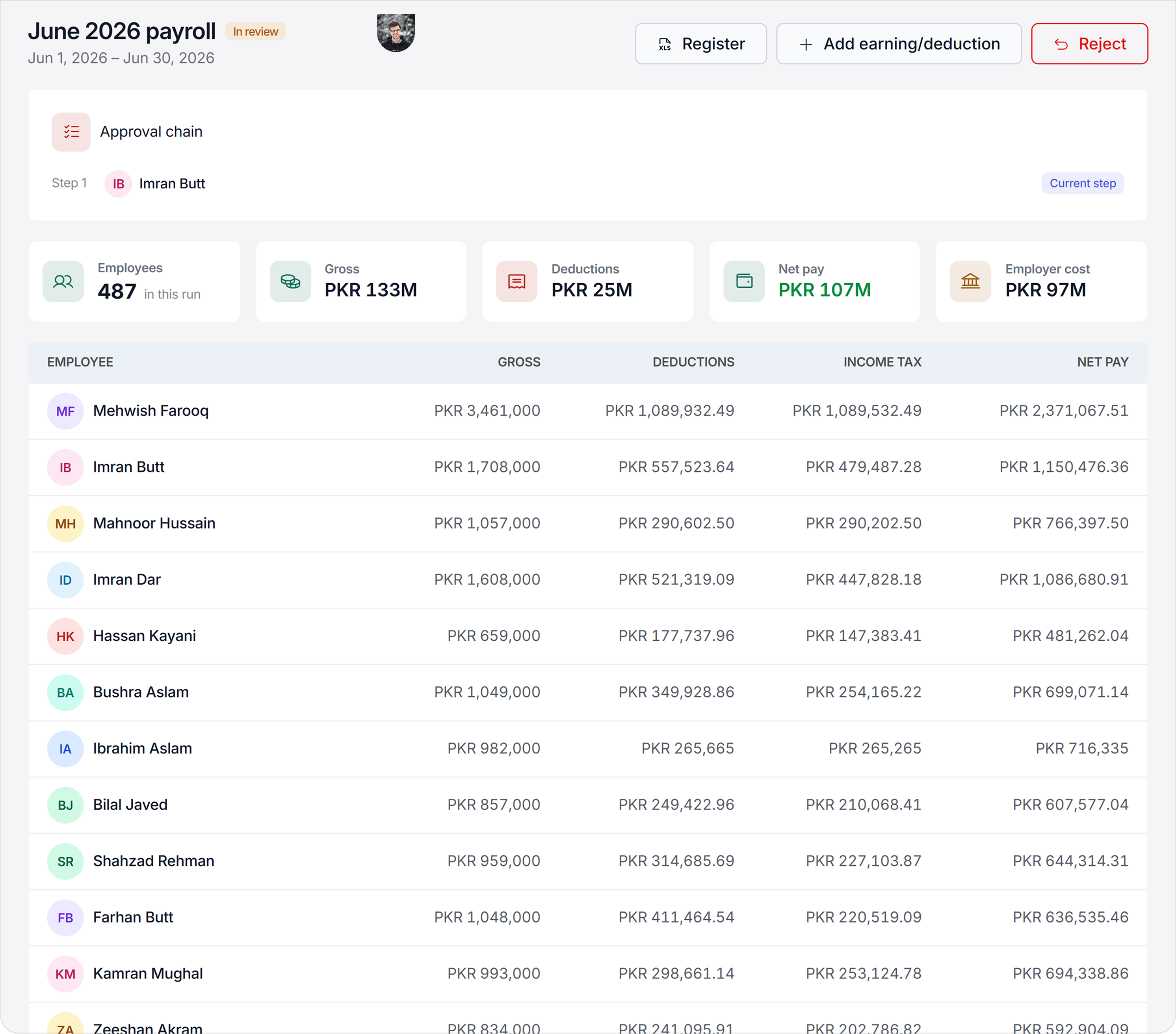
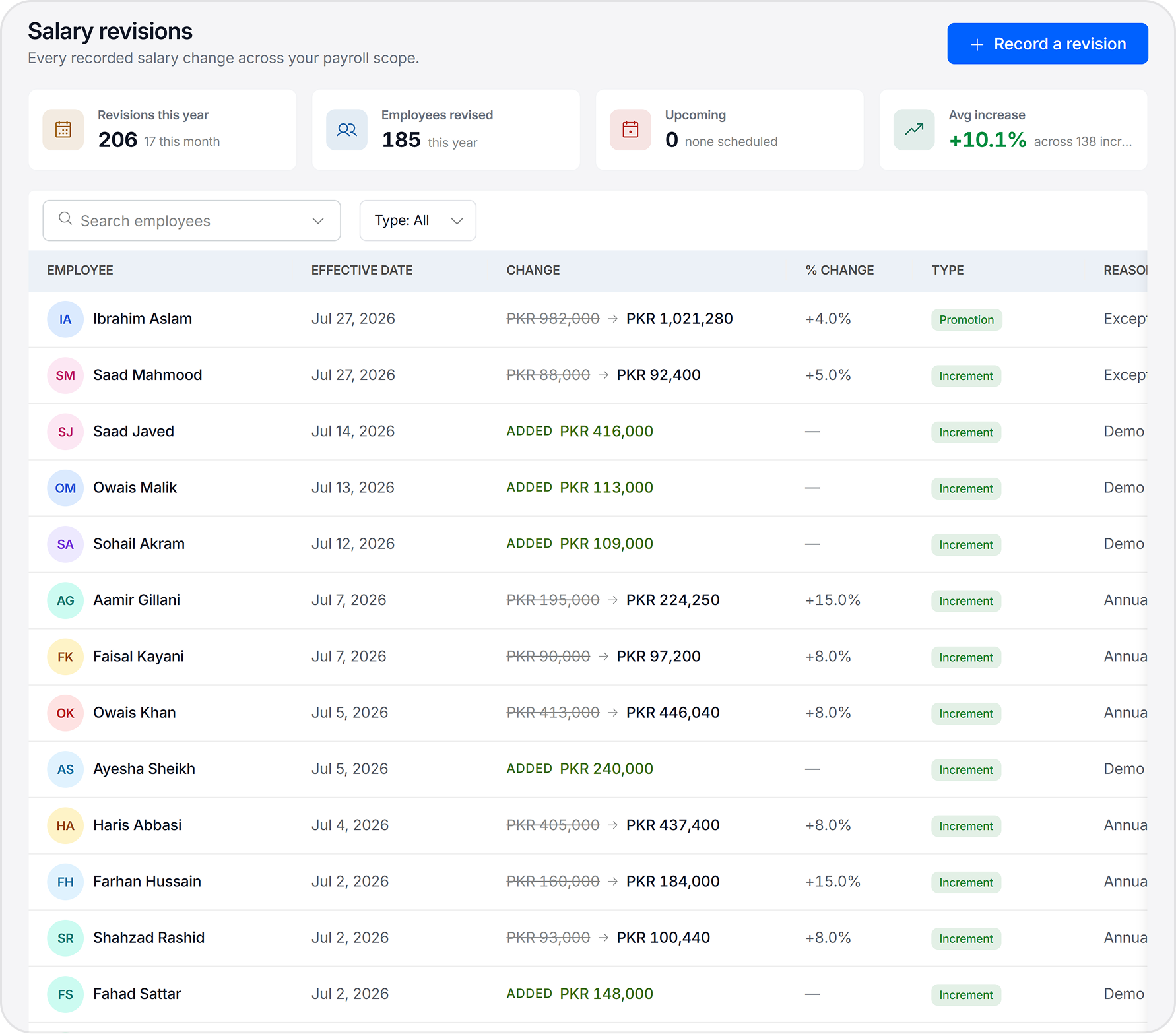
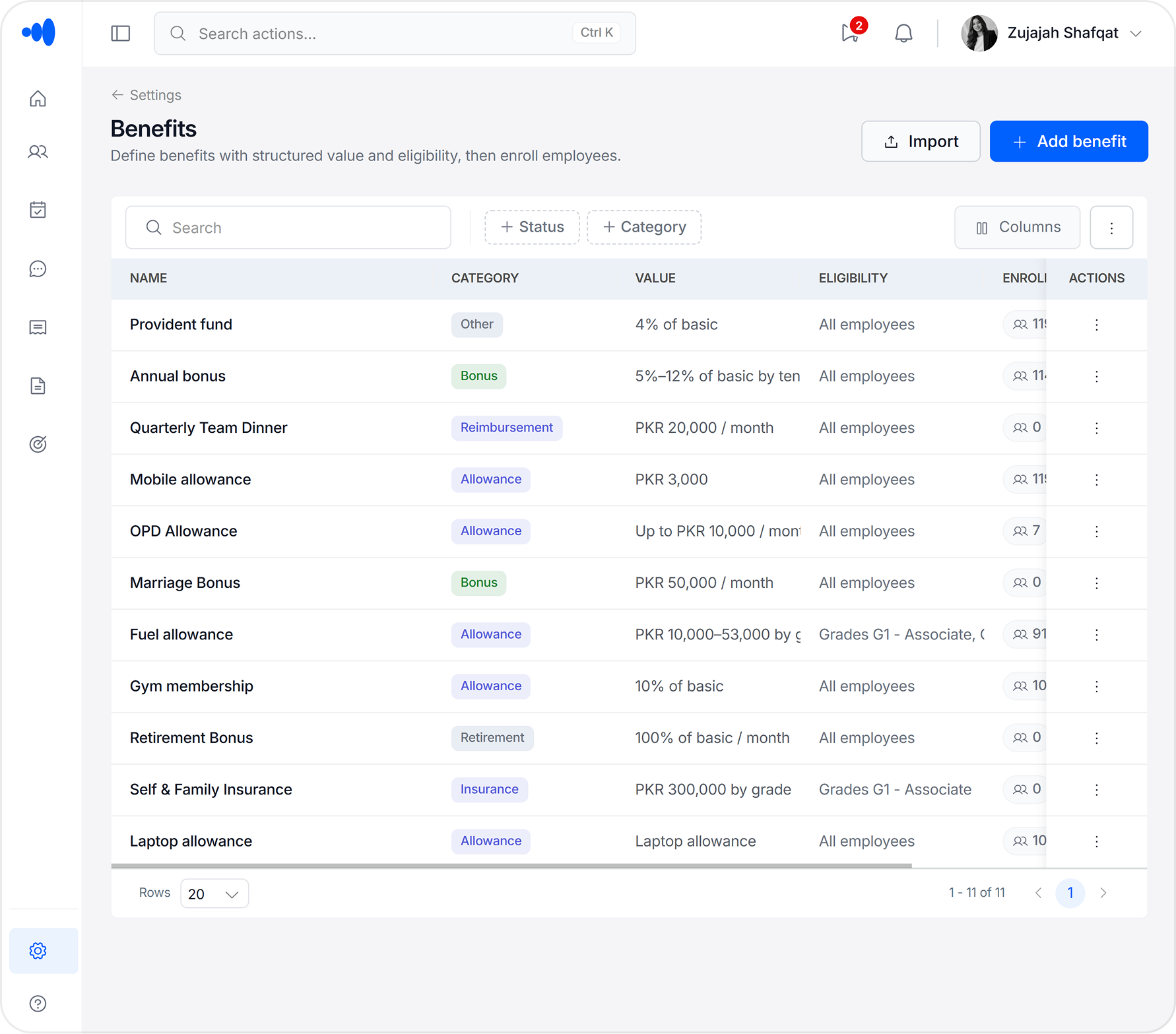
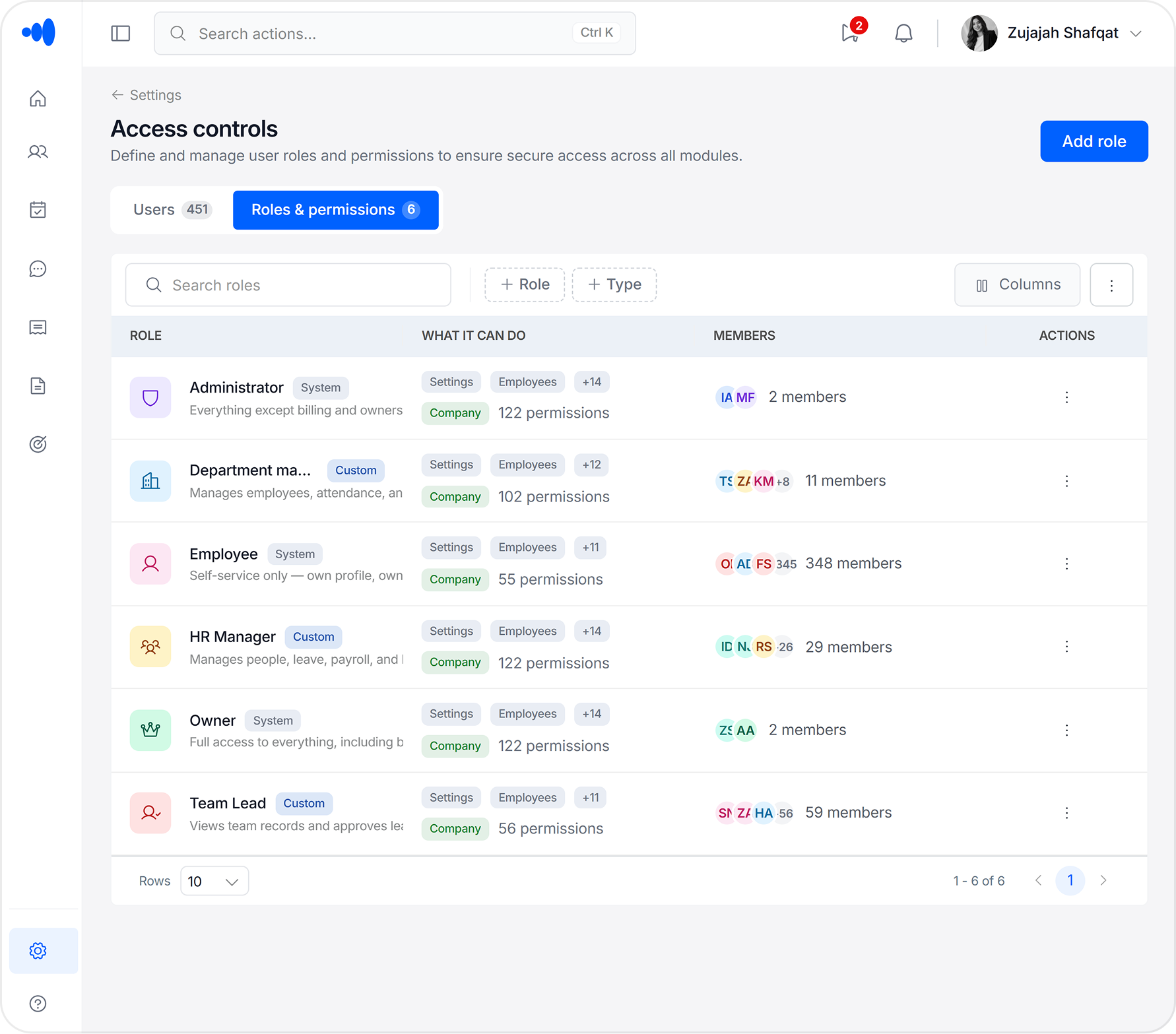
These are the modules where errors carry real cost. ChordHR keeps payroll inputs, employee benefits, and access controls all derived from the same employee data — so accuracy doesn't depend on someone checking twice.

Finance and compliance work breaks down when data has to move between tools by hand. ChordHR keeps payroll inputs, employee benefits, and access controls derived from one shared employee dataset — so nothing drifts.
Payroll Coordination, Benefits, and Role-Based Access Control all draw from the same employee records — so accuracy is structural, not procedural.
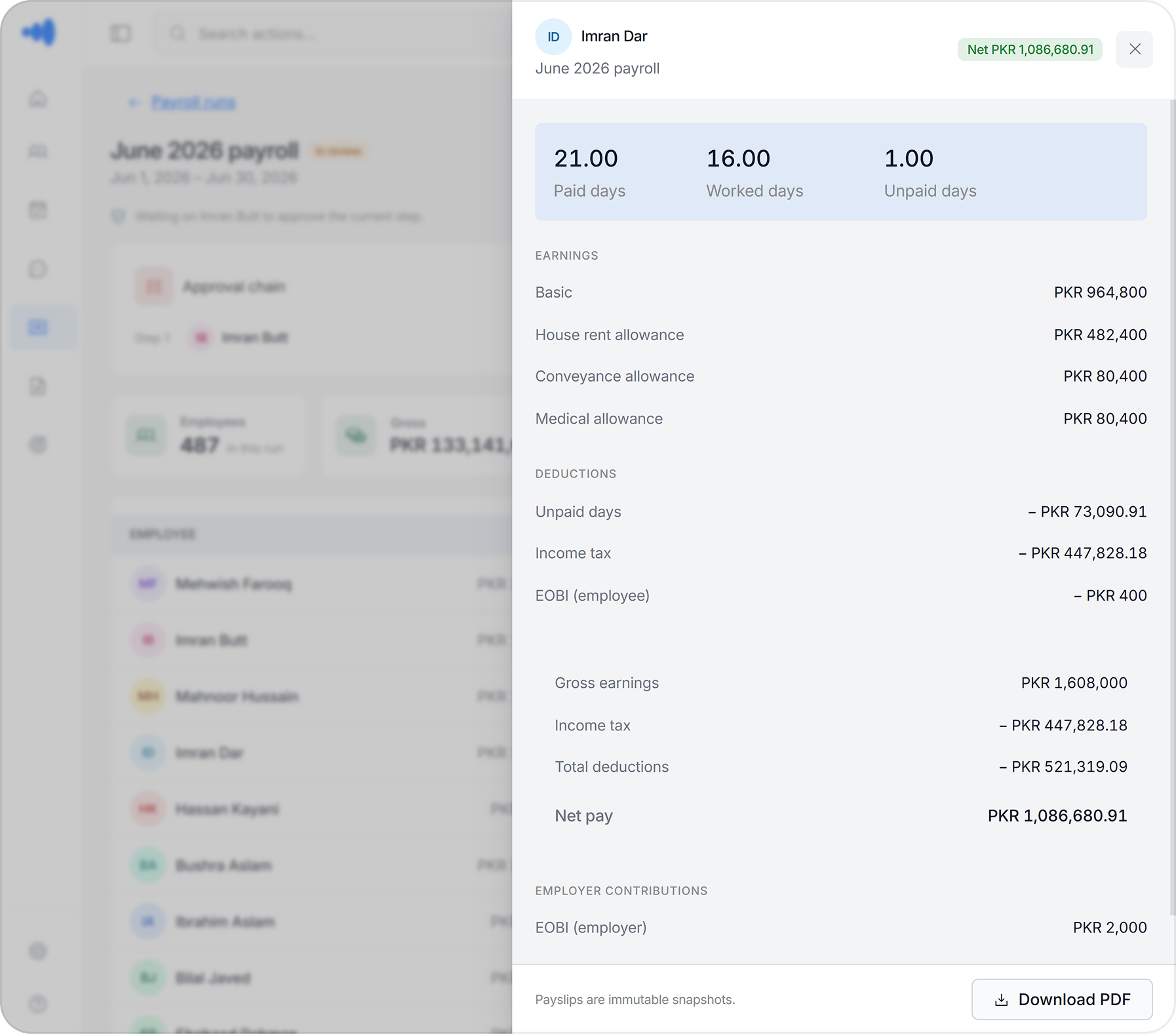
Attendance, leave, and overtime data flow into payroll preparation automatically — pulled from the same records HR uses every day. No month-end reconciliation, no duplicate entry, no formulas to break.
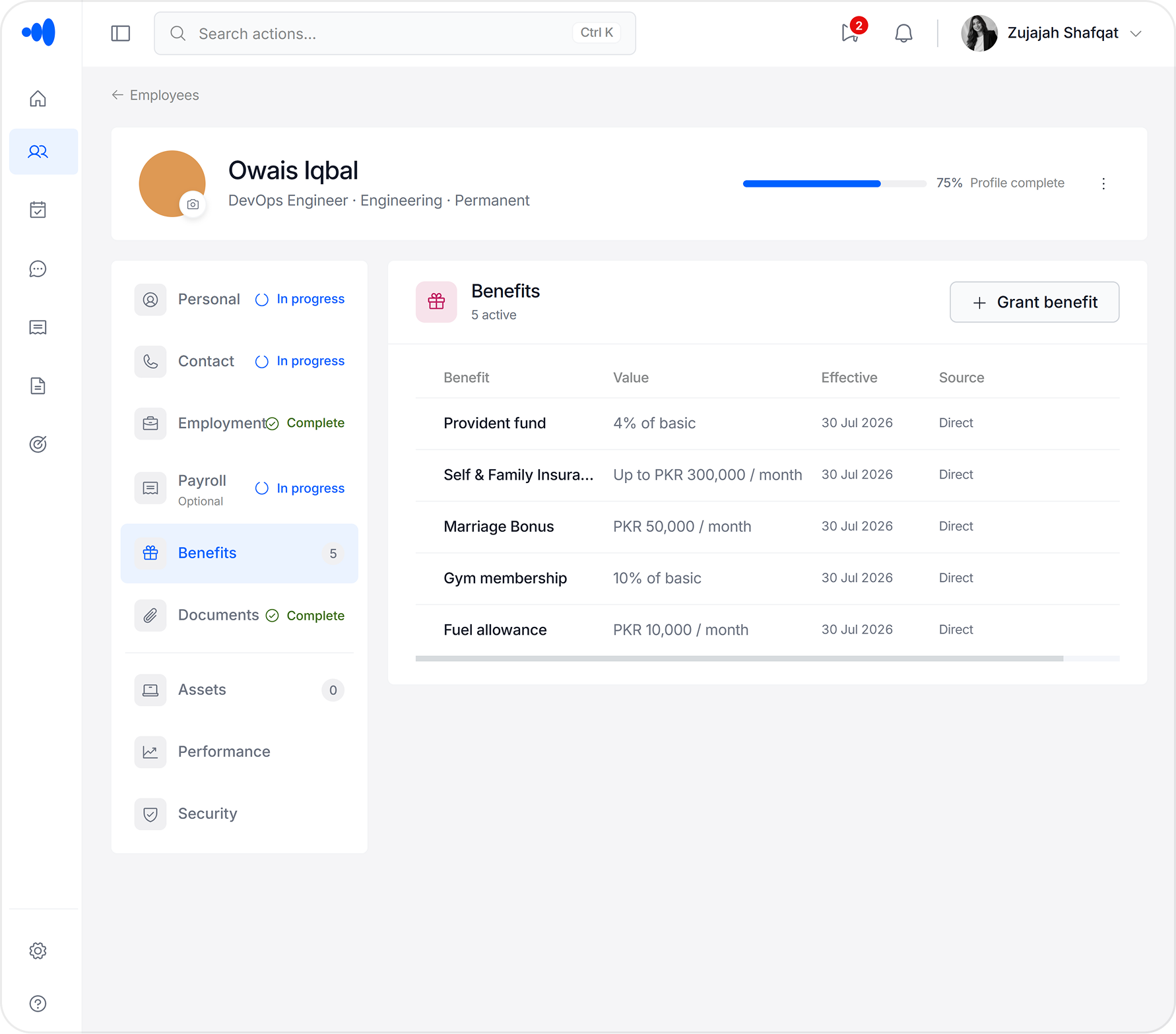
ChordHR lets HR configure benefit packages by role, grade, or employment type — health cover, allowances, leave entitlements, and more. Employees see exactly what they're entitled to in their self-service portal. No separate PDF, no separate announcement. When an employee's role or grade changes, their benefits update automatically.
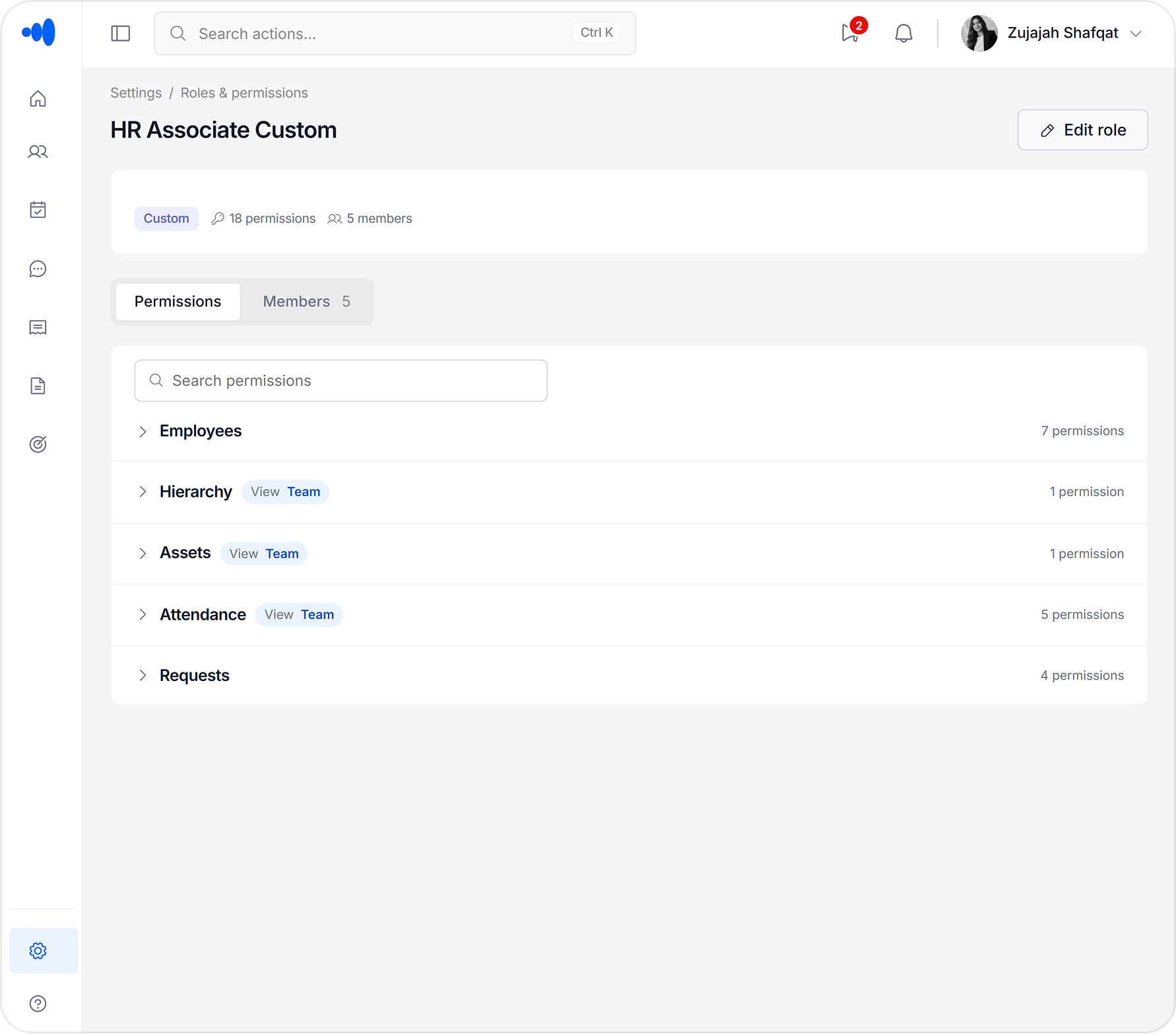
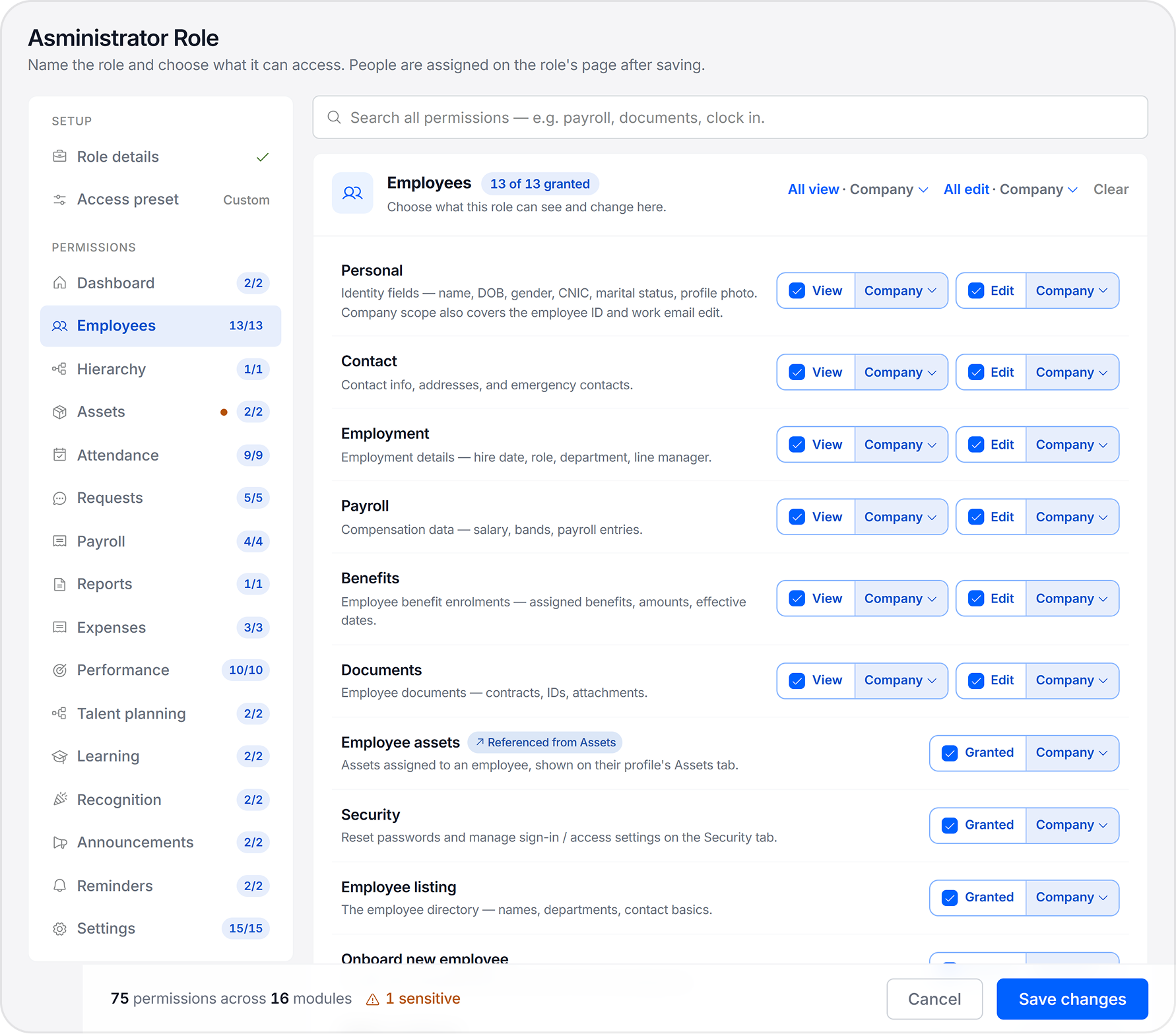
Custom roles — Owner, HR Manager, Department Manager, Team Lead, Employee, or fully custom — scope visibility across every module from one configuration screen. No per-module access settings to maintain separately.
These aren't edge cases. They're the things HR managers bring up in the first five minutes of every demo call.
Most HR tools ship with two roles. A Department Manager needs more than an employee but less than an admin — so IT gives them admin access to get the job done. Now they can see salary data, edit payroll settings, and change things they were never meant to touch.
The biometric device exports a CSV. Someone pastes it into the attendance sheet. HR compares it against the leave records. Payroll gets a number. If anything is wrong, they trace back through three systems and still aren't sure what happened.
Basic tools give you all-or-nothing access. Enterprise tools lock permissions behind certified admins. Most teams end up with roles that don't match how they actually work — Team Leads who can see salaries they shouldn't, or Managers who can't approve what they need to.
The benefits package is in a PDF from the last policy update, linked somewhere in an email from onboarding. Employees can't remember what leave they're entitled to, whether their health cover includes dependants, or what allowances apply to their role. HR answers the same questions every week.
Basic tools leave compliance to chance. Enterprise platforms overcomplicate it. ChordHR gives you the control that matters without building a configuration project.
Finance & Compliance shares the same data layer as the other module groups. Payroll inputs come from attendance and leave records. Benefits update automatically when employment terms change. Role-based access applies across every module automatically — nothing operates in isolation.